
Ultrasound Guided PRP Joint Injections In Benfleet
Platelet-Rich Plasma Therapy for Joint Pain & Regeneration at Monika Advanced Aesthetics
Ultrasound Guided PRP Joint Injections in Benfleet, Essex at Monika Advanced Aesthetics. At Monika Advanced Aesthetics, we offer Ultrasound Guided PRP Joint Injections, an advanced regenerative treatment designed to support the body’s natural healing process and improve joint function.
Platelet-Rich Plasma (PRP) therapy uses components from your own blood that contain natural growth factors. When injected directly into a joint, these growth factors can help stimulate tissue repair, support healing and reduce inflammation.
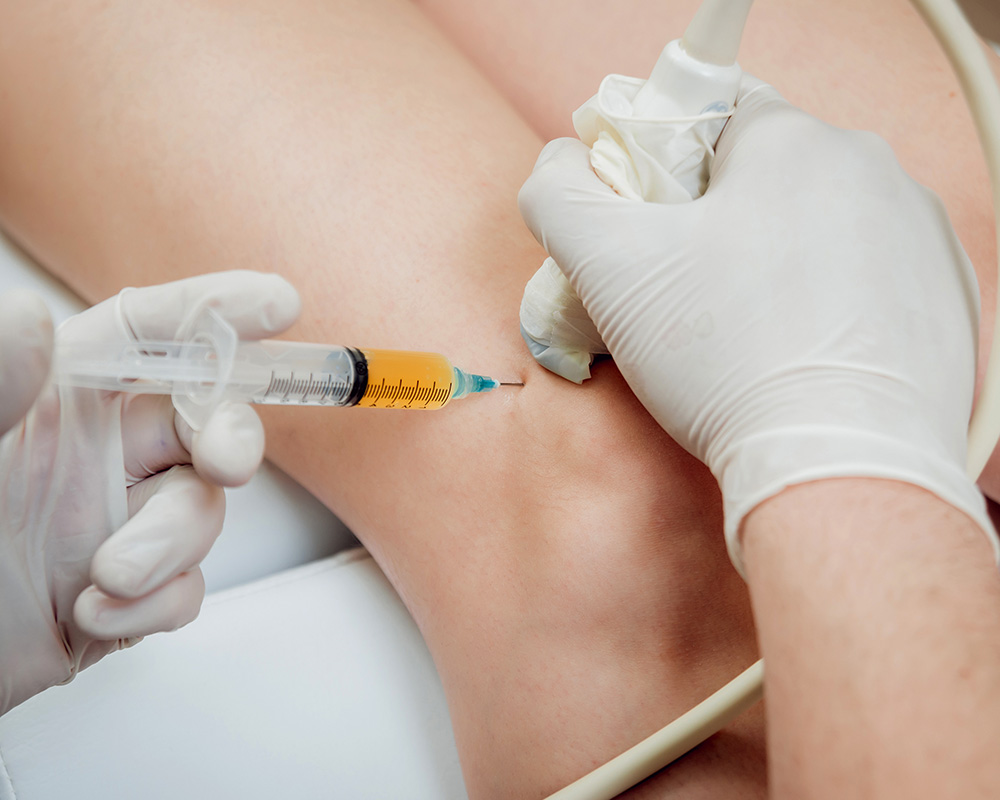
All PRP injections at our clinic are performed under ultrasound guidance, allowing precise placement of the treatment directly into the affected joint. This improves both accuracy and safety, ensuring the platelet-rich plasma is delivered exactly where it is needed.
Prices
Large Joint PRP Therapy
Knee
Single knee – £300
Both knees (same session) – £520
Course of 3 – single knee – £780
Course of 3 – both knees – £1,350
Shoulder
Single shoulder – £280
Both shoulders (same session) – £480
Course of 3 – single shoulder – £720
Course of 3 – both shoulders – £1,250
Hip
Single hip – £320
Both hips (same session) – £560
Course of 3 – single hip – £840
Course of 3 – both hips – £1,450
Medium Joint PRP Therapy
Elbow
Single elbow – £250
Both elbows (same session) – £420
Course of 3 – single elbow – £650
Course of 3 – both elbows – £1,100
Ankle
Single ankle – £250
Both ankles (same session) – £420
Course of 3 – single ankle – £650
Course of 3 – both ankles – £1,100
Wrist
Single wrist – £230
Both wrists (same session) – £400
Course of 3 – single wrist – £600
Course of 3 – both wrists – £1,050
What Are PRP Joint Injections?
PRP stands for Platelet-Rich Plasma, a concentration of platelets derived from your own blood. Platelets contain powerful biological proteins called growth factors, which play a key role in tissue repair and regeneration.
During the procedure:
- A small sample of your blood is taken.
- The blood is processed in a medical centrifuge to separate the platelet-rich plasma.
- The PRP is then injected directly into the affected joint using ultrasound guidance for precise placement.
Because PRP is created from your own blood, the treatment is biocompatible and designed to support your body’s natural healing response.
How PRP Helps Support Joint Health
Platelet-rich plasma contains natural growth factors that may help:
- Stimulate tissue repair
- Support regeneration of damaged tissue
- Improve blood supply in the treated area
- Reduce inflammation
- Support joint recovery and mobility
PRP therapy has been widely used in sports medicine, orthopaedics and regenerative medicine to support healing in joints and soft tissues.
Conditions PRP May Help Support
PRP injections are often used to support treatment for:
- Joint pain
- Early osteoarthritis
- Tendon injuries
- Ligament strain
- Sports injuries
- Chronic joint inflammation
During your consultation at Monika Advanced Aesthetics, we will assess your symptoms and determine whether PRP joint therapy may be suitable for you.
What Happens During the Treatment
A PRP session usually takes around 30–45 minutes.
The procedure includes:
- Clinical assessment of the joint
- Blood sample collection
- PRP preparation using a centrifuge
- Ultrasound-guided injection into the affected joint
- Post-treatment guidance
The treatment is minimally invasive and performed in a clinical environment.
Why Ultrasound Guidance Is Important
Using ultrasound during joint injections significantly improves the accuracy of the procedure.
At Monika Advanced Aesthetics, ultrasound guidance allows us to:
- Visualise the joint structures in real time
- Deliver the PRP precisely to the target area
- Avoid surrounding tissues and structures
- Improve treatment effectiveness
- Increase patient safety
Ultrasound-guided injections are widely considered the gold standard approach for many joint procedures.
Joints That Can Be Treated
PRP injections may be used for several joints in the body, including:
- Knee
- Shoulder
- Hip
- Elbow
- Wrist
- Ankle
The knee joint is one of the most commonly treated areas, particularly for individuals experiencing joint discomfort or early signs of wear.
PRP Treatment Course
PRP joint therapy is typically performed as a course of treatments to achieve the best results.
Recommended Course
3 treatments
1 session every 4 weeks
Spacing the sessions allows the body time to respond to the regenerative effects of PRP and gradually build improvements.
In some cases, a maintenance treatment may be recommended after 6–12 months depending on your condition.
Benefits of PRP Joint Therapy
PRP injections offer several advantages:
- Uses your body’s natural healing factors
- Minimally invasive treatment
- No synthetic medication injected
- Performed with ultrasound precision
- Supports natural tissue regeneration
Recovery & Downtime
PRP joint injections involve minimal downtime.
After treatment you may experience:
- Mild swelling
- Temporary soreness
- Slight stiffness in the joint
These symptoms typically settle within a few days.
Most clients can return to normal daily activities soon after treatment, although strenuous exercise should be avoided for several days.
Aftercare Advice
After PRP joint injections we recommend:
- Avoid strenuous activity for 48–72 hours
- Keep the joint gently mobile
- Stay well hydrated
- Avoid anti-inflammatory medication unless advised
- Follow any personalised guidance provided during your appointment
FAQs
How long does a PRP joint injection take?
The appointment usually takes around 30–45 minutes, including preparation and the ultrasound-guided injection.
Is PRP treatment painful?
Most clients describe the treatment as mildly uncomfortable rather than painful. The injection itself is quick.
When will I notice improvement?
Results usually develop gradually over several weeks as the body responds to the regenerative effects of PRP.
How many treatments will I need?
A course of three treatments spaced one month apart is typically recommended.
Is PRP safe?
PRP uses your own blood, which greatly reduces the risk of allergic reaction or rejection.